
Pickleball may have started as a friendly backyard game but has now evolved into a dynamic game with a variety of strategies to master. Whether you’re a beginner or a seasoned player, understanding the different types of strategies can significantly enhance your gameplay and elevate your chances of success on the court. Here, we delve into the diverse spectrum of Pickleball strategies that players employ to outmaneuver their opponents and secure victories.
Baseline Strategy
The baseline strategy involves playing from the back of the court, relying on consistent groundstrokes and deep shots to keep the opponents on the defensive. Players utilizing this strategy aim to control the tempo of the game by maintaining a solid defensive position while waiting for opportunities to transition to offense.
Dinking Strategy
Dinking is a finesse-based tactic characterized by short, soft shots hit close to the net. This strategy focuses on patience and precision, as players engage in strategic exchanges at the non-volley zone (the kitchen) to create openings and force errors from their opponents. Dinking is particularly effective in doubles play, where teamwork and coordination play crucial roles.
Attacking Strategy
The attacking strategy revolves around seizing opportunities to put pressure on the opponents with aggressive shots, including volleys, smashes, and well-placed lobs. Players employing this strategy aim to dictate the pace of the game, dominate the net, and capitalize on weak returns to maintain offensive momentum.
Counterpunching Strategy
Counterpunching involves adeptly reacting to the opponent’s shots and turning defense into offense. Players utilizing this strategy focus on consistency, footwork, and anticipation to absorb and neutralize their opponent’s attacks before seizing control of the point with well-timed counterattacks.
Mixing Strategies
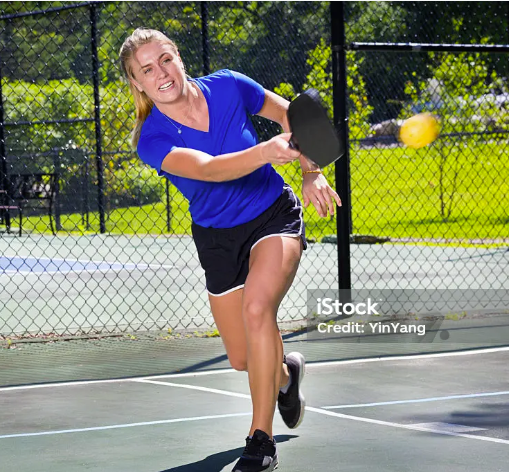
Many players employ a combination of different strategies throughout a match, adapting their approach based on factors such as opponents’ playing styles, court conditions, and game situations. By mixing strategies, players can keep their opponents guessing, maintain versatility, and exploit weaknesses more effectively.
Serve and Volley Strategy
The serve and volley strategy involves serving aggressively to set up opportunities for a quick transition to the net, where players can use their volleys to finish points. This tactic puts pressure on opponents by reducing their reaction time and forcing them to hit passing shots or lobs under duress.
Defensive Strategy
In certain situations, adopting a defensive mindset can be advantageous, especially when facing formidable opponents or when trailing in a match. Defensive strategies prioritize consistency, patience, and minimizing unforced errors to stay in rallies and wait for opportunities to turn the tide.
Mind Game Strategy
Beyond the technical aspects of Pickleball, the mental aspect of the game plays a crucial role in determining outcomes. Mind game strategies involve psychological tactics such as varying shot placement, changing pace, displaying confidence, and staying composed under pressure to unsettle opponents and gain a mental edge.
Conclusion
Mastering Pickleball strategies is an ongoing process that requires a combination of skill, adaptability, and tactical awareness. By familiarizing yourself with the diverse array of strategies and honing your execution, you can enhance your performance on the court and enjoy greater success in this exhilarating sport. Whether you prefer to play defensively, offensively, or somewhere in between, finding the right blend of strategies that suits your playing style can lead to thrilling matches and memorable victories in the world of Pickleball.